Distinguish connected monitoring, remote control, included probes and exact-model limitations. This guide uses exact listing records, not hands-on tests. Seller specifications illustrate the questions to ask; they do not establish measured cooking performance.
Start with an explicit connectivity statement
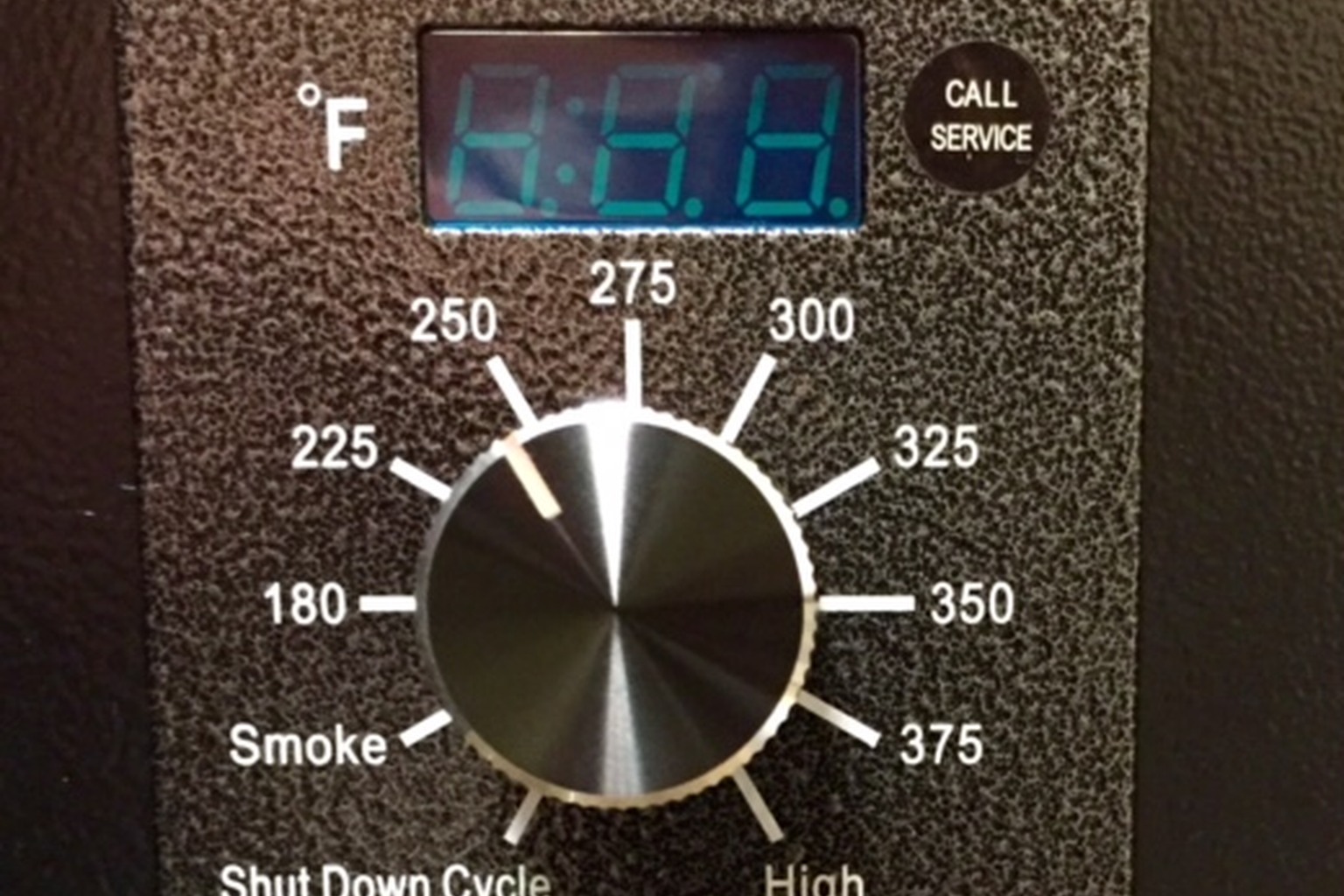
A digital display does not prove that a grill connects to a phone. Look for an explicit statement about WiFi, Bluetooth or the manufacturer's named connection system in the exact listing. The Pro 780 record names WiFIRE and describes changing temperatures, monitoring food and receiving alerts through the Traeger app. The Pit Boss 850 Navigator record separately states WiFi and Bluetooth capabilities. Those are positive listing statements, not measurements of network reliability.
Our WiFi shortlist requires explicit wireless wording and collected review evidence for a complete pellet grill. It does not infer connectivity from another model in the same series. A listing that says wireless is unavailable should not qualify merely because the keyword appears. If you are still choosing the overall format, start with the general buying guide rather than making an app the first and only criterion.
Separate viewing a reading from changing a setting
Monitoring and control are different functions. Read exactly what the product documents: viewing chamber temperature, viewing food-probe readings, setting an alert, changing a target or starting a program. Do not convert a vague connected-control phrase into every possible function. App behavior can also depend on the model, current software and setup, so verify the latest manufacturer instructions before purchasing for a specific workflow.
The Pro 780 listing supports a discussion of remote adjustment because it explicitly describes that function. It does not give us a complete app feature matrix or prove that every function works when a network connection is lost. Ask how the physical controls operate independently, how an interruption is reported and whether a phone is needed for setup. The temperature-control guide explains why a remotely displayed setpoint is not the same as measured temperature throughout the cooking space.

Check the probes and ports separately
A connected appliance may have probe ports without including the same number of probes. The Navigator 850 record states two meat probes are included. The Navigator 3-Series vertical smoker record states three probe ports and one included probe. These are distinct products, and that difference illustrates why you should list ports and supplied sensors in separate columns instead of copying one number into both.
Do not assume that a replacement probe fits because its connector looks familiar or because the brand matches. Check the supported part number, model revision and manufacturer instructions. Our accessory compatibility guide explains that process. An app cannot make an incompatible sensor accurate. We have not calibrated these probes or independently measured their response, and a seller's precision language is not presented here as a laboratory result.
Evaluate the connection at the intended location
Before purchase, identify where the appliance will operate outdoors and what the current manual requires from the network and phone. Verify supported network bands, app compatibility, account requirements and any setup restrictions directly with the manufacturer. We do not supply those values when the retained listing does not document them. A router that works inside your home does not, by itself, establish reliable communication at the chosen cooking location.
Also ask what happens during an app outage, a phone battery failure or a lost connection. These are operational questions to resolve before relying on alerts, not claims that any particular product will fail. Wireless control never replaces supervising the appliance, checking fuel and following the shutdown procedure. For fuel planning, read the hopper guide; a large hopper and a remote display together still do not establish a safe unattended runtime.
Treat convenience as a documented requirement
Make a short table of the functions you truly need, and attach the exact source to each entry. Mark an unknown as unknown instead of awarding a feature because the product title says smart. If a function matters enough to decide the purchase, verify it in the current manual or support documentation for that exact model. Screenshots from an older app or another edition may be insufficient evidence.
Our editorial score is not an app-quality score. It blends captured Amazon review evidence and documentation completeness under the published method. Reviews can mention several topics and may be shared across variations, so the numerical average does not isolate connection performance. Use the shortlist to locate eligible equipment, then check your network, included probes, physical controls and cooking-area needs. A well-documented nonconnected alternative may fit your routine better than a connected model whose essential details remain unresolved.
Sources and further reading
- Traeger Pro 780 Wood Pellet Grill & Smoker, 780 Sq In, WiFi
- Pit Boss 850 Navigator Series WiFi & Bluetooth Wood Pellet Grill & Smoker, Flame Broiler and LCD Digital Controller, 932-Sq. In. Cook Space, 180°F to 500°F Temp Range, Meat Probe, 30 lb. Hopper
- Pit Boss Navigator 3-Series WiFi & Bluetooth Wood Pellet Vertical Smoker with LCD Digital Controller, 1,118-Sq. In. 5-Rack Cooking Space, 130°F to 420°F Temp Range, Meat Probe, 50 lb. Pellet Hopper